29.3.11

101

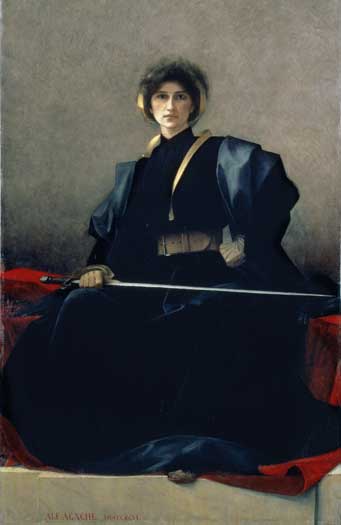
Alfred-Pierre Agache -- L'Épée 1896

because everything was political:
the politics of how many rings before i pick up
how many goodbye's before a hang up
the intricate act of interruption
of smiling back at strangers walking by

the politics, sometimes, of sexual intercourse:
easily evaded
everything was, until it wasn't and we were lost
easily deceptive

the politics of ink-pens and yellow-papers waltzing between meanings and intonations 
the handling of a fork and choosing wine
of discreet discriminations between articles to discuss
it was all political all of it all and all

it was gratuitous and grandiose and then i thought
-i don't know how to change my Canadian tires-
the politics of ending a song
of ending a story
is the most delicate yet
and the politics of it is never political enough.


27.3.11

bones of trust

i saw my own bones. they were so dedicated, so stubborn at first.
inflexible.
but the way they organized themselves on top of each other seemed temporary and deceptive. 
and so i had to. someone had to break them.


26.3.11


I don't know how else to say this. 
But.


bon appetite


have some (francis) bacon today


or roast beef

24.3.11

medium rare

3 for $8


both her hands were so dry. so dry on my skin that i was reminded of why winter never laughs out loud. 


my hands were soft, too soft i thought. and suddenly i was reminded - my hands are made of clay.

Kinky Doors


Luis Jacob

A voice tangled to my robe,
shrieking nervously as the morning penetrates the room
stacks of lullabies hide and
oxidize into shark words.

Shark words that mother left behind
when she revealed that she’s a woman.

Sharp gazes exchange above the table,
as he butters the bread and bites
into the punitive feast.

A headline hanging above my head,
inviting kinky doors in the
room that is without
and within manuscripts saturating my cheeks
into prints of bruised bulletins.

Blood-cells revolt and gangs of wine
conspire an engagement between us.


Nov/2010


23.3.11

word of the day


exodus |ek-suh-duh s
noun a going out; a departure or emigration, usually of a large number of people• the Exodus, the departure of the Israelites from Egypt


* so, where are the swallows today? 

if you read Persian

then maybe read one of my poems:

برایم بمان
شعر شدی، توی سرم افتادی
چرخ زدی مستم شدی
داستان که شدی از سرم افتادی
جوش آمدی سوزاندیم
سرد که شدی خاکسترم دود شد هوا
چرا نمی‌‌ماند
چرا نمی‌‌ماند
چرا این حسّ مگسی 
لعنتی چرا شعر نمی‌‌مانی
ابر شدی برایم تا سفرهاو بیهوا بالا
باران شدی روی زمین شکستی
من میپرسم و نمی‌‌دانم و جوابم
دوباره با صدای خندههای ناخوانده آغاز شد
و با نگاهِ خواستنیت
توی دفترم خط شد
و خواستت تمامِ معنای یک منظرهٔ دور
که نمی‌‌بینمش و نمی‌‌دانم چرا این حسّ مگسی
لعنتی چرا نمی‌‌ماند
چرا شعر برایم نمی‌‌ماند
شَک شدی و چند آرزوی محال
محالِ هم شدیم و هیجان سکوت
فریادم فَصل شد و رفت
داستان شد و افتاد از سرم
این لعنتی باز هم نماند.
نیویورک / ژانویه/ ۲۰۱۱
* from my soon-to-be-published poetry collection: This is Not a Pomegranate

Liz


From: Los Angeles Times

"Coincidence to be sure, but Elizabeth Taylor's death Wednesday morning at 79 coincides with Nowruz, sometimes called "Persian New Year." Beginning on the first day of spring and lasting for 13 days, Nowruz -- "New Day" -- celebrates the start of nature's annual cycle.

In the summer of 1976, photographer Firooz Zahedi was himself beginning something new when, as a relatively recent graduate from Washington's Corcoran School of Art, the aspiring young artist accompanied Taylor to Iran. Zahedi photographed the acclaimed 44-year-old actress -- and extraordinary beauty -- in the cities of Persepolis, the ceremonial capital of ancient Persia's Achaemenid Empire; the garden-city of Shiraz; and, finally, architecturally splendid Isfahan.
Those pictures, never before shown together, are on view at the Los Angeles County Museum of Art. Zahedi, now a well-known commercial and Hollywood photographer, explains the unusual circumstances of the expedition in this short video, produced by the museum for "Elizabeth Taylor in Iran: Photographs by Firooz Zahedi." The show remains in the fourth floor galleries of LACMA's Ahmanson Building through June 12."

bienvenu

Chapter III – Train to Paris


The words still echo in my head: “Ostokhoonhaat, sedaye pooki midan” [Your bones, sound hollow].
It’s a line from the lyrics I wrote to his song. The night before, I was front row at some East-London venue singing along to it with 400 other people pulsating behind me. It was feverish.
Surreal.
But now almost sober, I’m on a 9:00 a.m. train to Paris. 

"It’s fucking happening, life, as we celebrate or lament or wait around, or stand there thinking, one croissant or two? Almond or plain? Do you have a lighter? I missed my train. Where is my cellphone? Denied application? Deterred. Delayed. Deferred . . ."

Trees flash by unpretentiously, as if waiting for a pair of eyes. I close my eyes; I can still hear them. 
I recognize my love for him. I realize it because there is a mysterious part of my brain, of my body, that is absent and/or fleeting at all times. It must be his.

I write down “I love this city. I’ll move away if it kills me […] Comfort is the death of me.”

Bienvenu a Paris.  I open my eyes.  

things

Chapter II - London


And suddenly I’m in it again. In the middle of it all, at the British Museum.


I stand against a gold crown that shines shamelessly at me. It belonged to a nomadic 19-year-old girl who lived in first century A.D., around Tillya Tepeh (in today’s Afghanistan). The precious heirloom was designed so that it would fold, piece by piece – how practical.
It keeps on shining amongst other pieces of jewelry, with such prosperity that it’s hard not to wonder, what happened. The geometrical pattern looks so “modern” that I laugh at how unique we think “modernity” is.
Post modernism, formalism, structuralism; all these ‘isms’ to make us feel like we’re constantly progressing and developing— Oh yes, we are evolving, no?
I see a pattern: birth, progress, reaction, regress, and death. There is nothing linear about it.


I look at maps of long-gone polities and gated cities. I notice the luxurious landscapes that people had the pleasure of looking at, and how much space they each had to roam around.
Every pillar, every public garden, every wall, was beautifully hand carved with ornate designs, and with such purpose and care that I had to search for some air when I imagined them getting violently seized, looted and destroyed.
The victorious Empire, whether it was the Persians, Greeks, or Mongols, would then seep in and settle. Or abandon what was left of the city for us to dismantle and show case in museums centuries later.

And then foolishly I think, I wish our cities had gates. Nostalgia for things we never had, is the foolish part.


14.3.11

word of the day

Fabien de Chavanes - currently exhibited at galerie binôme/Paris


limp(ly) adjectivelacking internal strength or structure; not stiff or firm • having or denoting a book cover that is not stiffened with board.• without energy or will
* because I saw the word twice within two hours in two completely different texts [New Yorker, Feb 28th; Nausea by Sartre] - I was having a bottle of wine by myself, in a London Cafe. Yes, an entire bottle. 

2+2=4

Here's why I haven't blogged lately:

" . . .  make it clear that I need to write more, to enter spaces that are void of other human connections, and speak out to myself. No amount of 140 characters, witty-sentences, blog posts, or texts, or headlines, have such a cleansing, meditative impact on me. This sincere, solid excursion of thoughts, rationale, and expressions is necessary. It is vital for my sanity, creativity, and logic..."

Chapter I -  The Airport

I’m born again on an airplane / in the airport. I wonder if my mom ever traveled on air while pregnant with me.

Can I ever go back to Iran again? I long to smell the gasoline-filled air, find the rugged men on the street, all sweaty and sleazy, sexy and beautiful…I want to get a taxi, see old friends who have either changed too much or not at all…I miss the landscapes of Tehran and the mountains in the North. I miss it all.

But here’s the thing. They may arrest reformist clerics and former presidents, and opposition leaders…They can jail directors, actors, artists, writers, and professors…They may torture and vanish activists, journalists, and students. And I mean, what’s left in a country like that? Construction workers and government employees?
Whatever it is that they’re trying to build now, is it even worth it?
But even so, you may kill the painter, but not art. You can get rid of writers and journalists, but not literature or truth. Jail students and teachers, but what about knowledge.

2 + 2 = 4. You can’t take that away.